Let’s hear it for the buffet — the edible version of “try before you buy,” allowing you to sample many dishes before deciding which ones deserve a bigger portion on your plate. They’re also perfect for family or group dining, with a guarantee that everyone will find at least something to their liking. And since nothing says holidays like a feast (a word with the same Latin root as “festive”), Christmas and New Year’s dinner and brunch buffets have become beloved traditions for many.
The same holds true in Hawai‘i but with an added appeal for visitors. Hawaii’s holiday buffets also showcase the diverse multicultural influences on local cuisine, which bloomed during the plantation era of the late 1800s through the mid-1900s, and the island’s contemporary, more boutique agricultural scene. The menus of the upcoming holiday dinner and brunch buffets at the OUTRIGGER Kona Resort & Spa’s Piko restaurant provide many such dishes —and inspiration to visit some of the sources of their deliciousness, too.
For example, the starters for the Christmas Eve Grand Dinner Buffet at Piko ($99 adults, $49.50 ages 5 to 12) include a salad with Waimea mixed greens, heirloom grape tomatoes, English cucumbers, radishes, creamy goat cheese and candied macadamia nuts. The misty farms of upcountry Waimea (elevation 2,670 feet), about 45 miles north of the OUTRIGGER resort, produce exceptional lettuces and other leafy greens sought after by restaurants around the state; exquisite tomatoes of every size, often labeled Kamuela (after the town’s official mailing address); and several varieties of cucumbers and radishes.
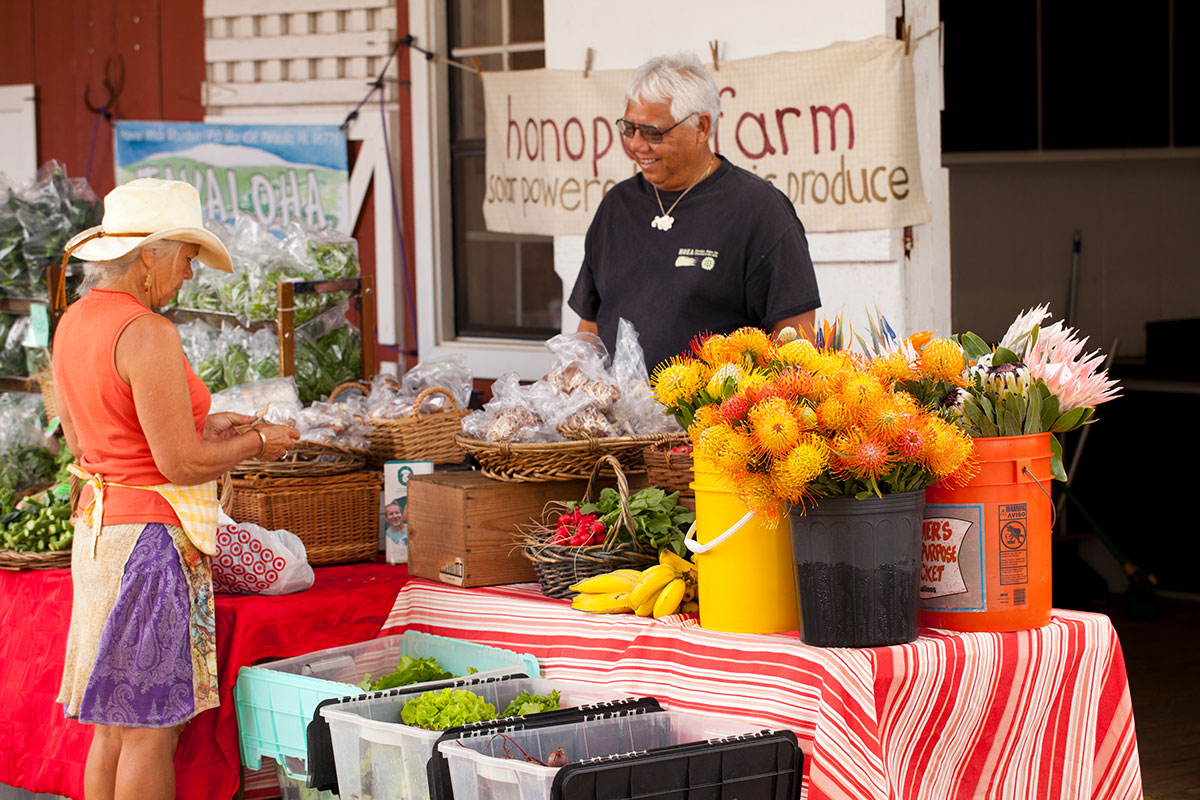
Family-owned Kekela Farms grows more than 100 kinds of vegetables in its fields off scenic Mana Road in Waimea, where it also hosts a farmers market on Tuesday afternoon and Saturday morning. Other area farmers and producers, including the Hamakua Coast-based Hawai‘i Island Goat Dairy and the macadamia nut growers Ahualoa Family Farms sell their wares at the Waimea Town Market Saturday morning at Parker School, or at the Pukalani Midweek Market at Parker Ranch’s historic Pukalani Stables.
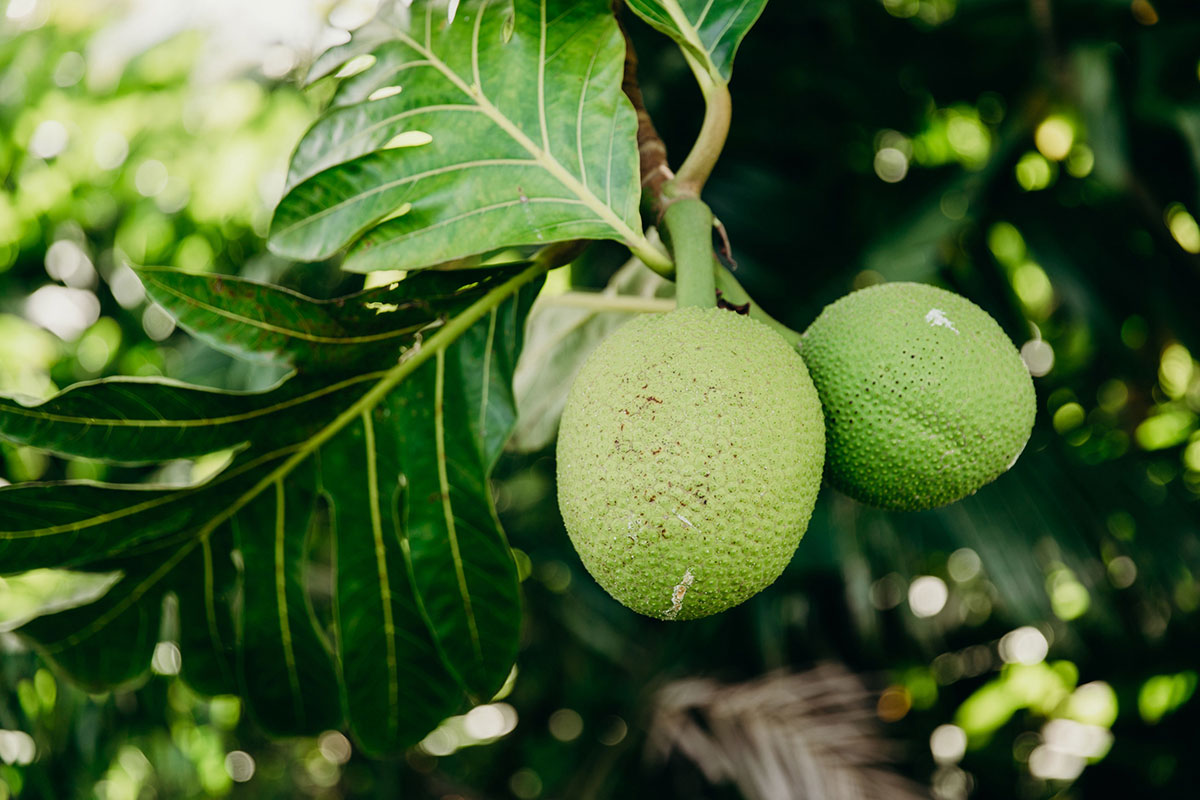
While macadamia nuts are native to Australia, and nearly all of the fruits and vegetables grown in Hawaii were imported in the years since Western contact, a few ingredients in the Piko holiday buffets are “canoe plants,” i.e. brought by the first Polynesian voyagers. Among the accompaniments for assorted rolls and rustic breads on the Christmas Eve menu is a hummus made with breadfruit (‘ulu), the nutritious, climate-resilient staple of Polynesia that’s making a comeback in Hawai‘i. A crisp ‘ulu cake also accompanies the seared A8 Wagyu tenderloin that’s an option on the New Year’s Eve dinner buffet at Piko ($130 per guest.)
The taro rolls in the Christmas Day brunch buffet at Piko ($90 adults, $40 ages 5 to 12) and New Year’s Day brunch there ($130 per guest) get their purple tinge from another canoe plant, kalo (Hawaiian for “taro”), which has profound cultural significance for Native Hawaiians. A 75-minute scenic drive from OUTRIGGER Kona leads to the 64-acre Big Island Farms in Honoka‘a, where 1-hour guided tours pass through gardens with taro, breadfruit and some 200 other species of edible and medicinal plants. Other edible canoe plants on the tour include coconut, turmeric, banana, sweet potato and sugar cane.
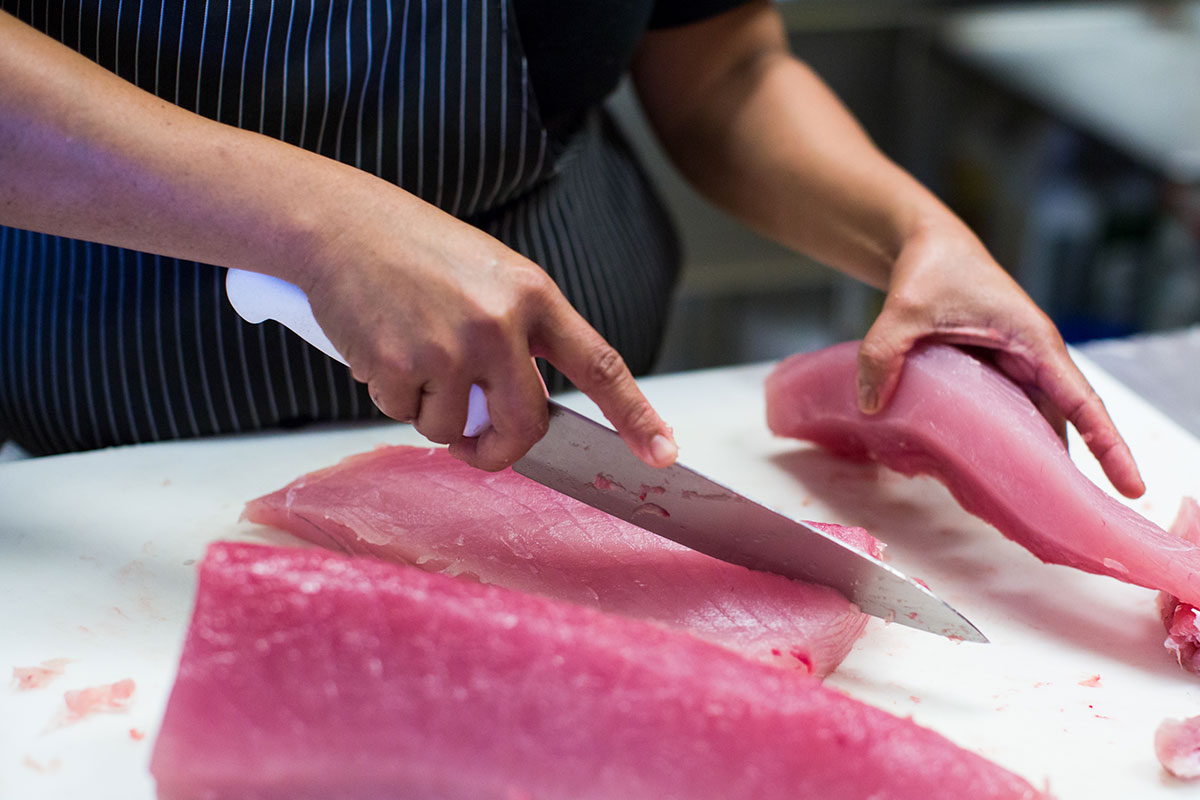
The Piko Christmas Eve menu includes an ahi, salmon and tofu poke bar, which is like a quick trip through Hawaiian history: Polynesian voyagers relied on raw diced (poke) ahi seasoned with seaweed and sea salt during their ocean travels, while early post-contact trade with British Columbia’s First Nations and English communities led Hawaiians to develop a taste for salmon; buoyed by several generations of immigrants from Japan, Honolulu’s H. Iwanaga Daufu became the first commercial tofu maker in the islands in 1923.
The first Japanese immigrants, survivors of an 1868 shipwreck, brought miso and soy with them, which now add umami to one of the Christmas Eve buffet’s main courses, a grilled honey miso fish with baby bok choy and brown butter soy. Mochiko, the Japanese rice flour, is used to batter the fried half Puna chicken also on the buffet, along with steamed white rice — another modern fixture of the local diet that, like tofu, was popularized by Chinese and Japanese immigrants.
The first Hawaiians came to the islands with chickens and pigs to supplement the proteins the could harvest from the sea. Today, caramelized pineapple — a nonnative fruit first documented in Hawaii in 1813— adds tangy sweetness to the glazed ham on Piko’s Christmas Eve buffet, with fresh pineapple also appearing in elaborate fruit displays at both the Dec. 24 and 25 buffets. To get a closer look at how pineapple grows (hint: not on trees), book one of the twice-weekly, 2-hour tours of Kuaiwi Farm, a 15-minute drive south from OUTRIGGER Kona. There you’ll also get an intimate look at the region’s famed coffee plants, avocados, bananas, tea, citrus, vegetables and cacao — the source of chocolate, which guests sample along with coffee, mac nuts and various fruits.
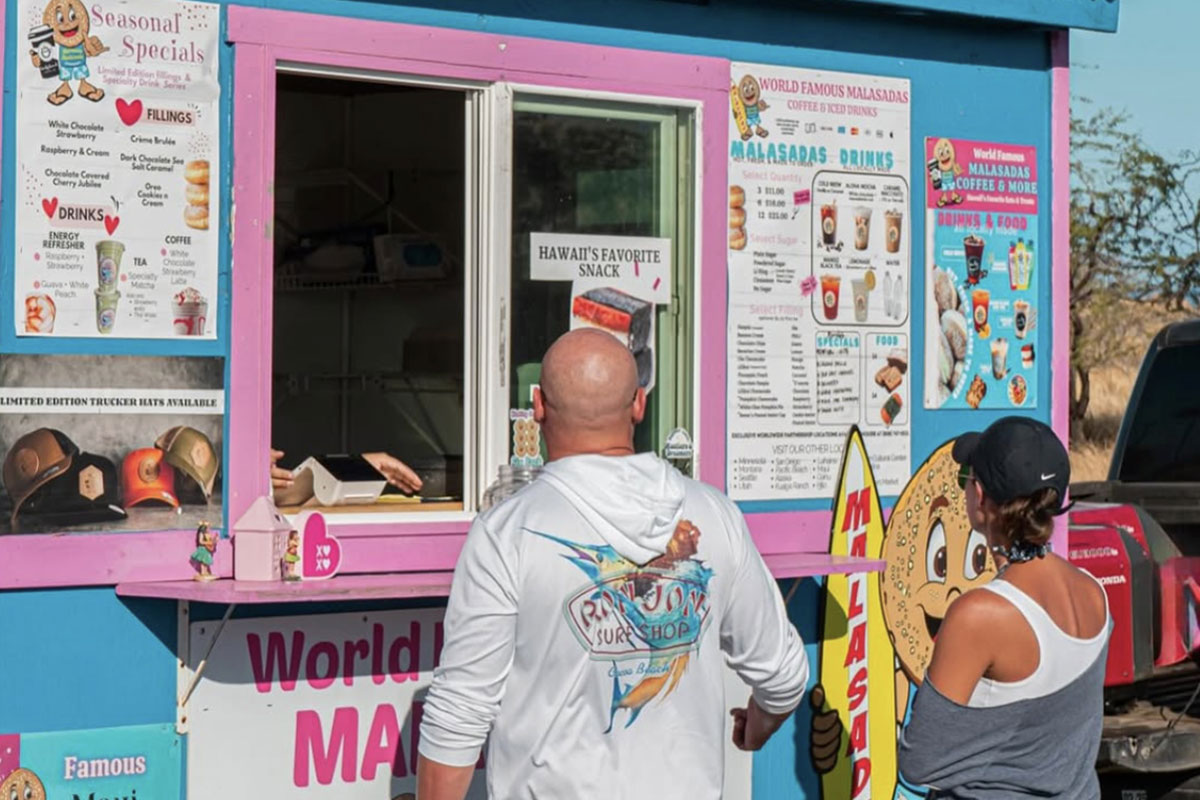
Speaking of chocolate, the dessert spread at the OUTRIGGER Kona’s Christmas Day brunch includes a chocolate ‘ulu pudding parfait along with scones, muffins, pastries, a pavlova wreath and a gingersnap crumble. The standout, though, may be the malasada croquembouche—a tower of the doughnut-hole-sized treats brought to Hawaii by Portuguese-speaking immigrants from the Azores and Madeira. If you miss it, you can always try creating your own stack by driving an hour north to Manuela’s Malasadas food truck near Puako, exploring a variety of toppings like li hing mui (from a sweet-tart Chinese plum) and fillings like Bavarian cream or haupia (coconut pudding) that also celebrate the rich diversity of Hawai‘i.