

I’ve never understood the tendency to dismiss the modern luau as “just for tourists.” When done right, the experience immerses the audience in Hawaiian history and culture, activating all five senses to do so. And not only do visitors gain a better understanding of their unique surroundings, cultural practitioners receive support for their dedication to perpetuating ancient traditions.
Take, for example, the Feast & Fire Luau, presented twice weekly at OUTRIGGER Kona Resort & Spa. The setting is inherently dramatic: a wide green lawn overlooking lava-rock-lined Keauhou Bay, a short walk west from the 1814 birthplace of King Kamehameha III. To the south are the Lekeleke Burial Grounds, where the forces of Queen Ka‘ahumanu and King Kamehameha II defeated those who wanted to keep the traditional kapu system in 1819. It’s fringed by native hala (pandanus) trees, whose long leaves provide the traditional weaving material for hats, mats and other items and whose trunks sit on a pyramid of stilt-like roots.
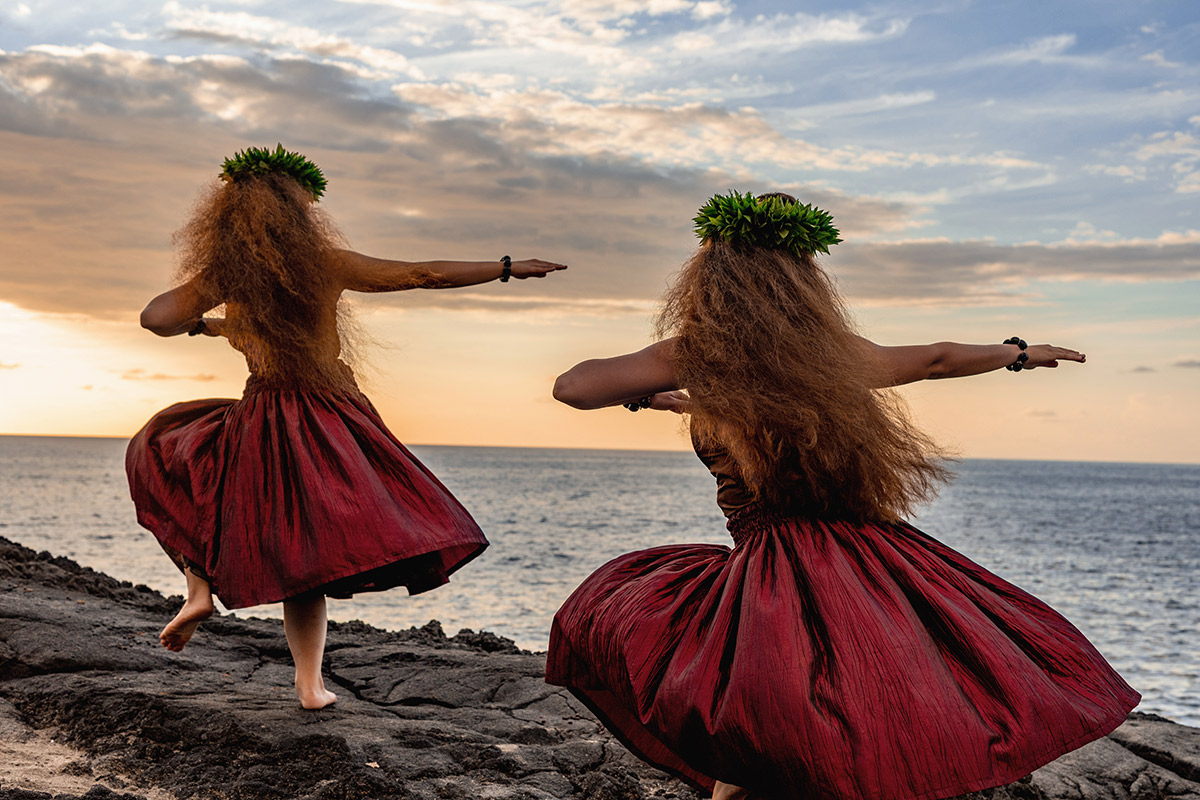
“Feast & Fire” heightens the drama through storytelling, music, costumes and of course dance, all presented by Traditions Hawaii, founded in 1994 by Edward Yap and Nani Lim-Yap. A judge at the most recent Merrie Monarch Festival, hula’s most prestigious competition, Lim-Yap is the second generation of the well-known Lim family of musicians from Kohala on Hawai’i Island and the esteemed kumu hula of Hālau Manaola. She served as a cultural director and consultant on “Feast & Fire,” working with her son, celebrated fashion designer Carrington Manaola Yap, and her daughter, Asialynn Genoa Kalihilihi‘ulaonālehua‘ohōpoe Kama-Yap, a music producer, recording artist, cultural practitioner and former Miss Aloha Hula contestant who now leads Traditions Hawai‘i as CEO and emcees “Feast & Fire.”
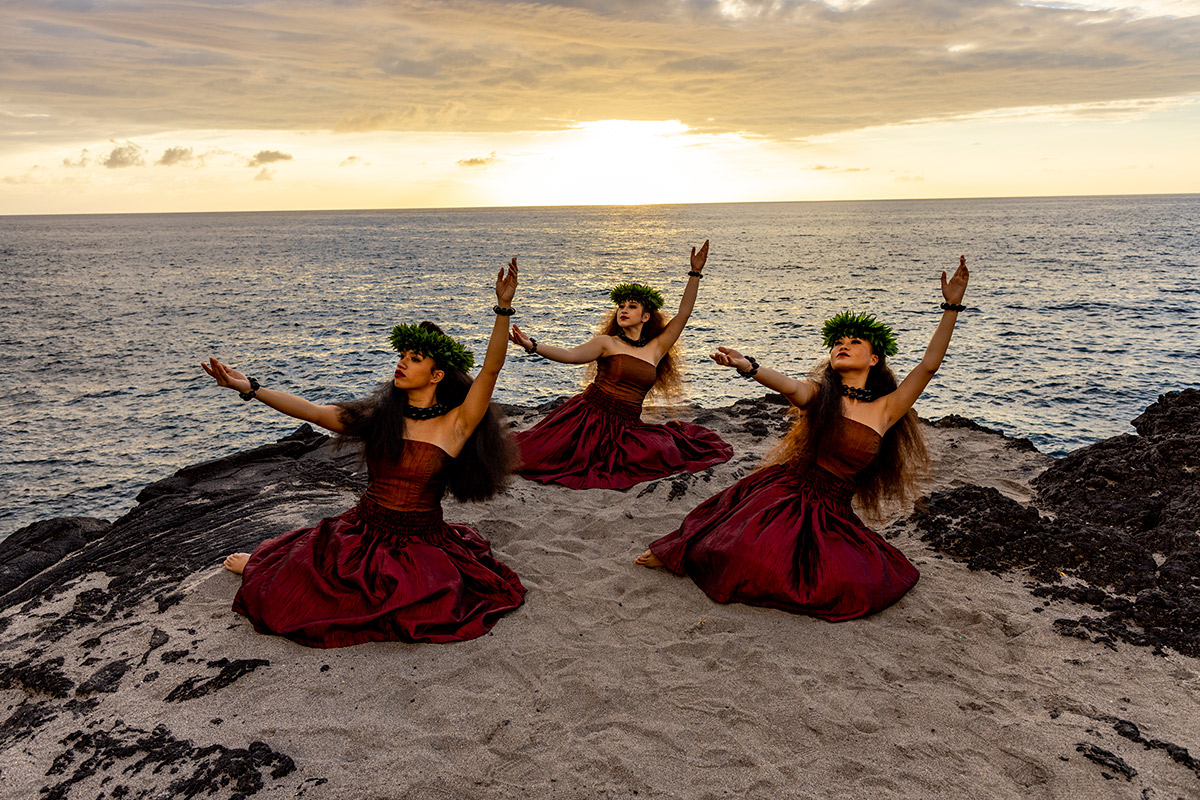
Some of Manaola Yap’s distinctively patterned costumes for both traditional (kahiko) and modern (‘auana) hula performances could easily appear on a Manaola runway, while still being true to the tales told through hula of Pele’s arrival in the islands, for example, or of the skills of the Hawaiian cowboy. “Traditions are the fibers that tie us to place, connect us to the past and bind us together,” he said when the enhanced version of “Feast & Fire” debuted in 2024.
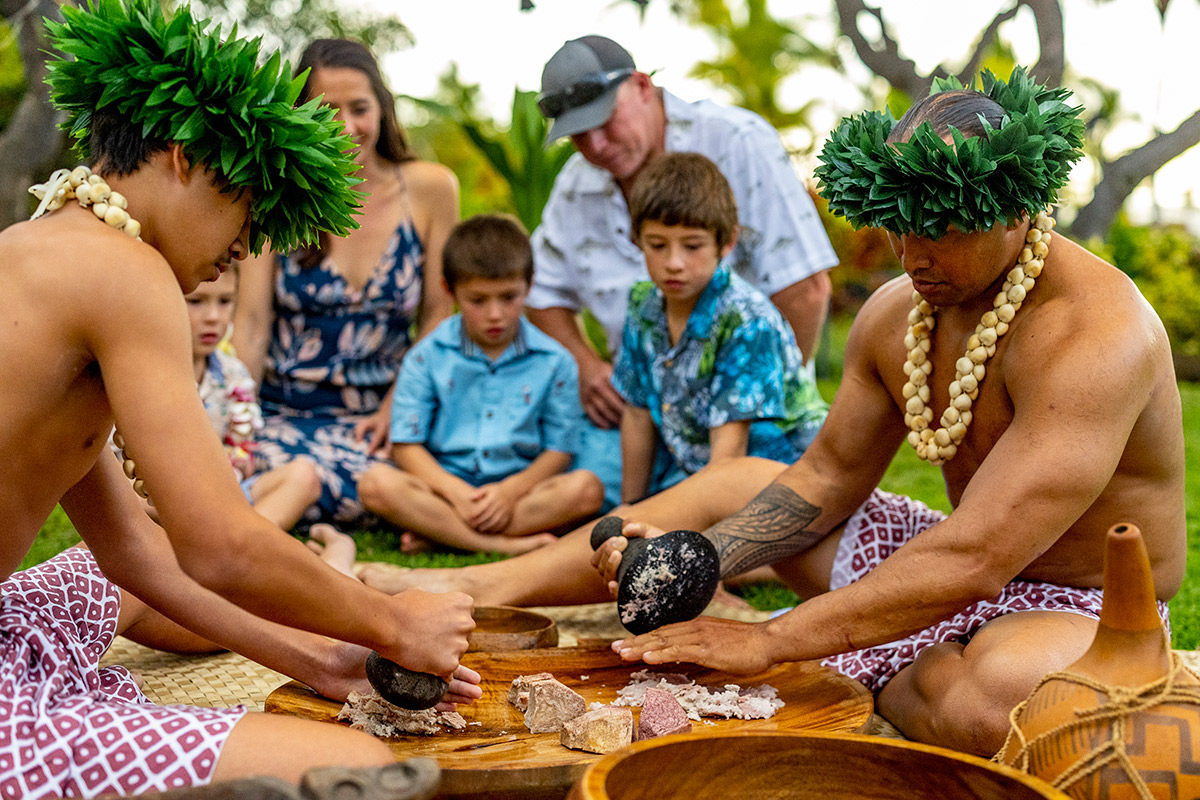
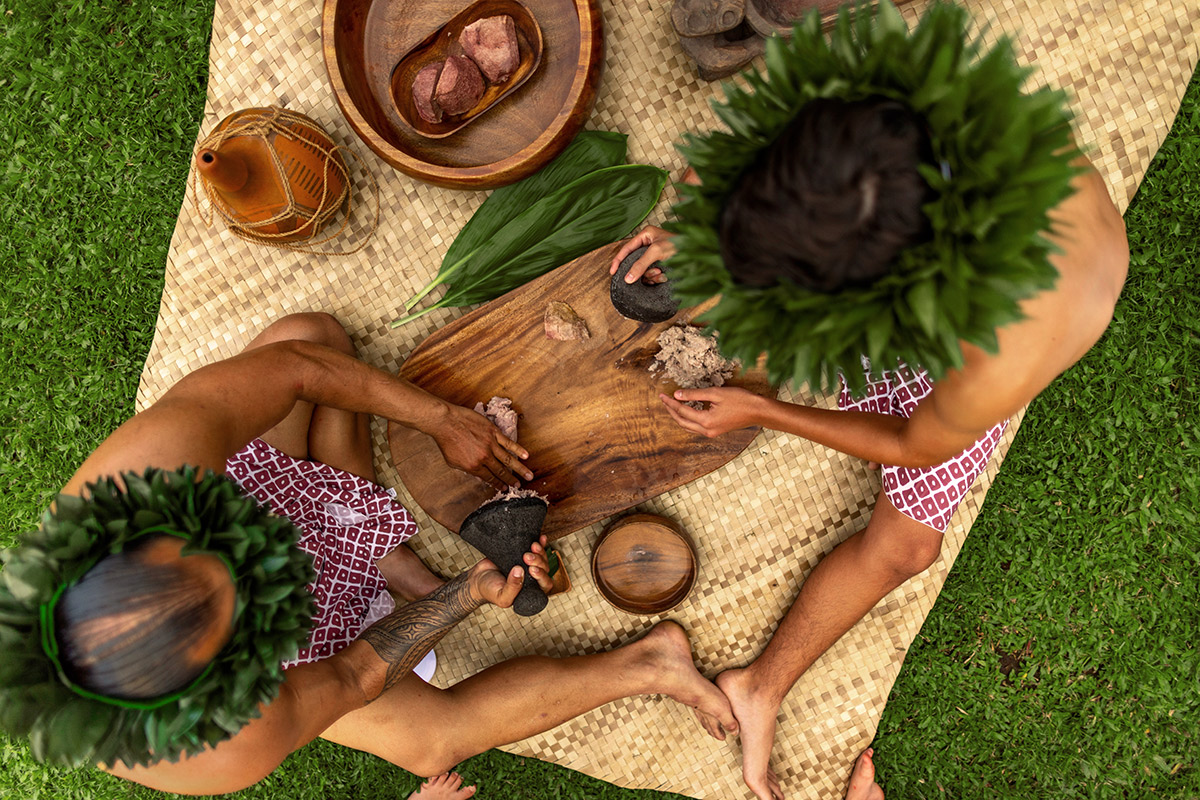
This luau “mainly focuses on hula and cultural stories that are from this place,” Kama-Yap noted in a promotional video. “I would say what’s really great about our luau is that it’s very traditional, very authentic. We also highlight a lot of cultural practices and activities, like traditional bamboo stamping” — ‘ohe kapala, the technique that inspires her brother’s hand-designed prints — “as well as traditional Hawaiian lei making.” Guests can also watch demonstrations of taro being pounded into poi with lava-rock pestles on wooden boards before the dinner show begins.
The buffet dinner incorporates at least four of the five senses (sight, scent, taste, touch), or the full five, if you count the live music while you dine, while also revealing aspects of Native Hawaiian culture and the modern multiethnic communities that call the islands home. Consider poke, a dish that dates back to the first Polynesian voyagers who arrived more than a millennium ago; while crossing the Pacific, they could catch a fish, dice it and eat it raw, with perhaps just a dash of sea salt or seaweed for flavoring. The “Feast & Fire” poke bar includes not only spicy ‘ahi poke but also lomi salmon, which became a popular dish once ships started sailing between British Columbia and Hawai‘i in the late 1700s; tofu poke, whose main ingredient was likely introduced by Chinese immigrants in the second half of the 19th century; and namasu, thinly sliced pickled vegetables brought by Japanese plantation workers, who began arriving en masse in the late 1800s.
Proteins and side dishes also trace the twin stories of Hawaiian traditions and plantation life. The underground ovens of Polynesia are known as imu in Hawai‘i, where whole pigs with hot rocks inside are covered with banana or ti leaves, burlap and dirt before steam-roasting for hours. The tender, smoky meat that results is called kālua pork, or more informally kalua pig, and it’s served at “Feast & Fire” alongside fresh local catch fish. If kalbi beef (marinated beef short ribs) is on the menu, you can thank the wave of Korean workers who came to Hawai’i starting in 1903. Sweet bread rolls owe their place on the menu to the arrival of 16,000 Portuguese immigrants om the Azores and Madeira between 1878 and 1911.
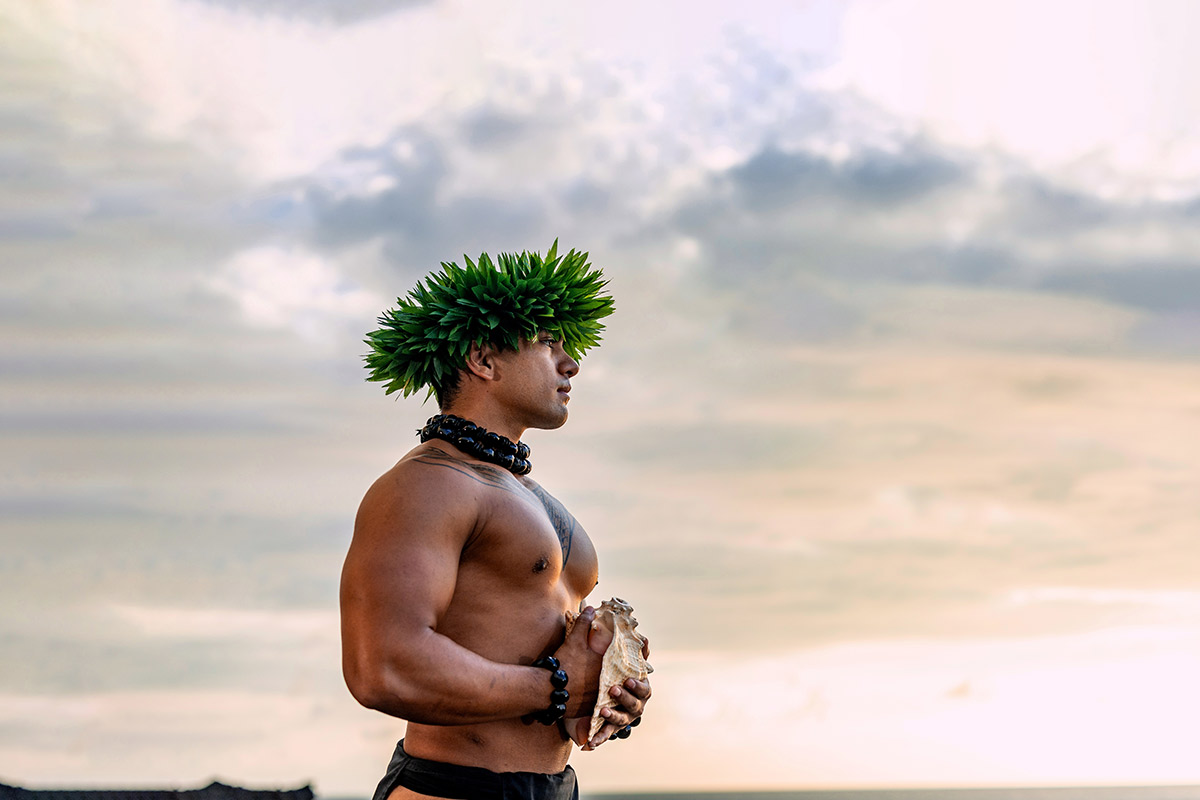
Of course, you can’t call your luau “Feast & Fire” without a significant amount of the latter. Like the key ingredients in the Kona coffee chocolate cake and the pineapple upside down cake, typically found on the dessert station, the main component of the fireknife dancing that concludes the evening is also not native to Hawai‘i. Instead, Samoan-American dancer Freddie Letuli added the element of fire to a traditional Samoan knife dance during a performance in San Francisco in 1946. Hawai‘i quickly embraced this new art form, though, and now hosts the World Fireknife Championships at the Polynesian Cultural Center on O‘ahu (May 6-14) and the Le Kaua Ailao World Fireknife Competition in Kailua-Kona (June 6).
On an island created by fiery volcanoes, as the hula at the beginning of “Feast & Fire” recalls, the spinning flames of the fireknife dancers create a literal full-circle moment to end a fascinating evening.